

Recordkeeping comparison
Digital Patrol Logs vs. Paper Logs
Compare how paper and digital logs handle a patrol’s observations, attachments, review, and final report. The full record’s journey matters as much as the entry surface.
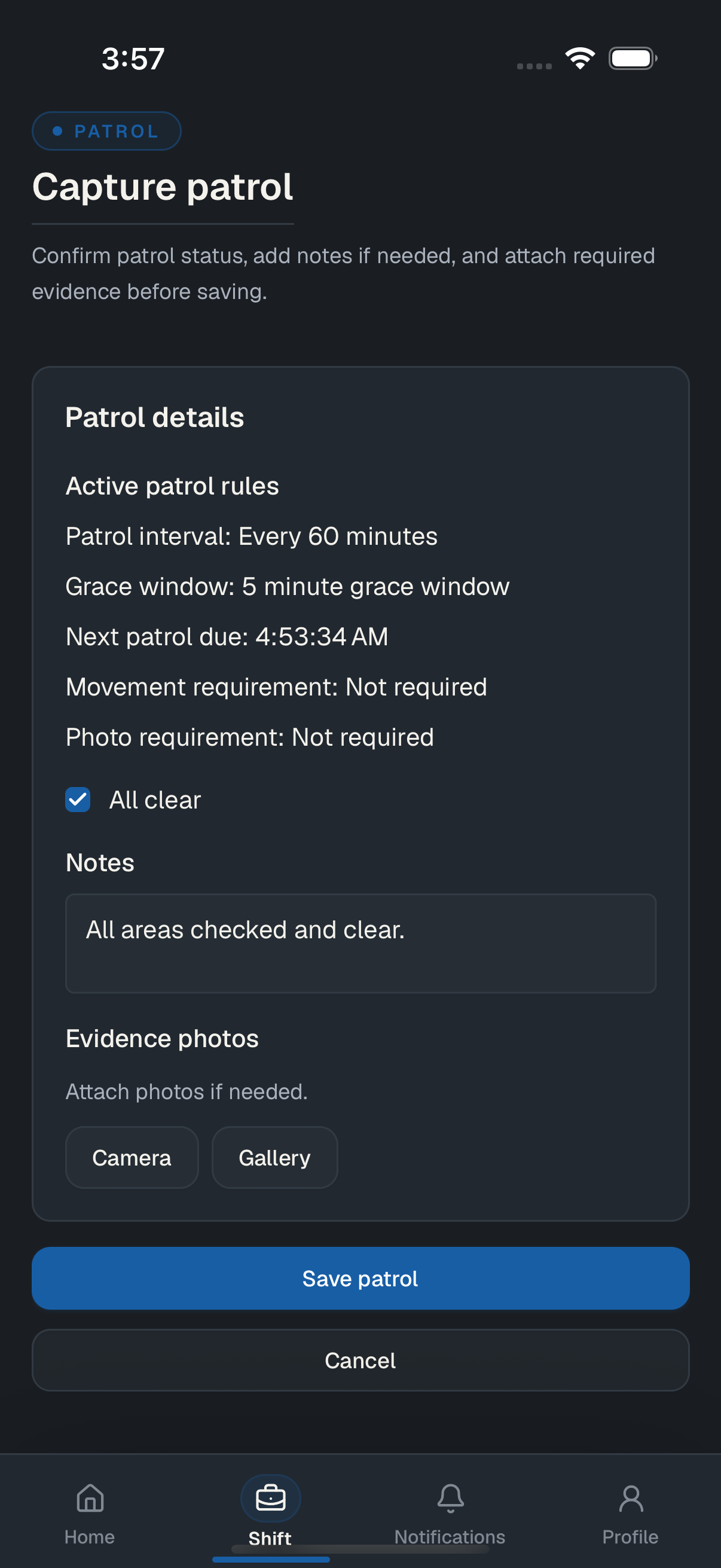
Compare the workflow, not just the entry surface
Use these rows to compare your paper procedure with JUDGR’s current workflow. Paper processes and digital products vary, so test the steps with your own representative shift.
Paper
Write the time and observations at the post
Handoff
Collect sheets and identify missing context
Digital
Link entries and evidence to the shift
Review
Read the record with its recorded context
| Question | Paper process | JUDGR workflow |
|---|---|---|
| Where does the entry belong? | The sheet header and filing process connect it to a shift. | The patrol is recorded within the specialist’s active assigned shift. |
| How is a photo connected? | The organization keeps attachment names and references aligned. | Supported evidence is linked within the operational record. |
| When can a reviewer read it? | When the sheet or copy reaches the reviewer. | After saved field work reaches the server, within authorized scope. |
| What happens without a connection? | Writing can continue without a network, if the form is available. | Supported capture continues on an already-started shift; new starts require online authorization. |
| How are changes handled? | The organization must preserve and attribute corrections. | Protected finalized changes follow controlled correction workflows. |
| How does the final report arise? | A person assembles or transcribes the retained source records. | Report processing uses shift records and retained evidence context. |
| How is authenticity checked? | Recipients depend on the organization’s distribution and document controls. | Operational reports support limited public authenticity verification. |
Where a paper log is straightforward
Paper works without a charged phone or network connection and provides a visible sequence of entries. A structured header and clear instructions make it a useful starting point. The patrol log template is available in PDF and Word.
Assign responsibility for collecting sheets, retaining originals, matching attachments, and distributing readable copies. Scanning preserves the page; separate photos and incidents still need to be reconciled.
Where a connected log changes the handoff
JUDGR connects assignments, patrols, evidence, incidents, review, and reports. Supervisors inspect synchronized records in their shift context instead of assembling returned sheets and attachments.
New work starts online from the specialist’s assignment. Independent sites use hourly movement-qualified patrols; stationary posts need applicable movement-optional jurisdiction rules and periodic entries. Inspect the current Fire Watch Shift Report format before adoption.
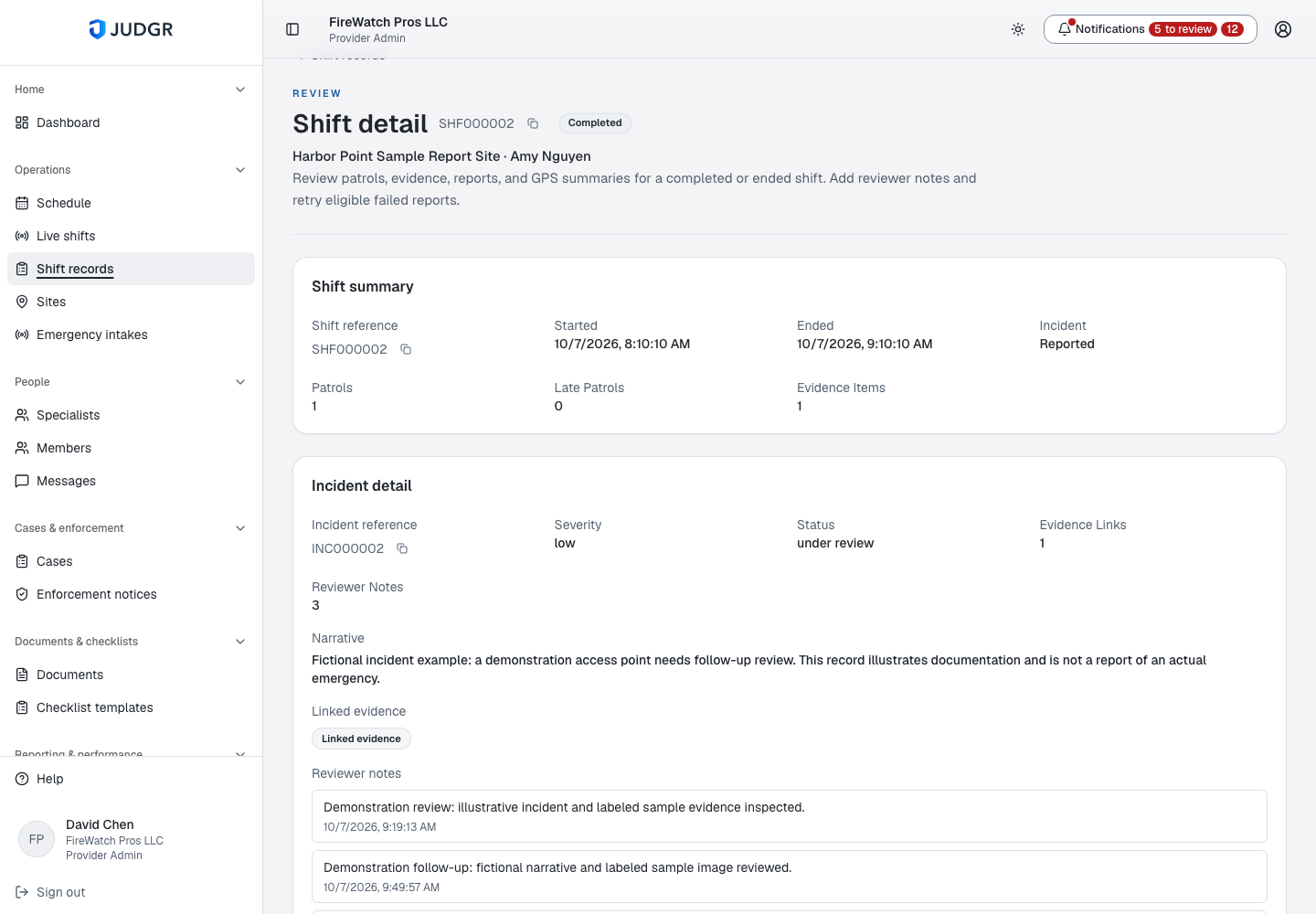
Compare failure and recovery explicitly
For paper, plan for lost sheets, unreadable entries, or detached attachments. Preserve attributed explanations of gaps rather than recreating an apparently complete original.
For JUDGR, test connection loss after start, denied permissions, interrupted uploads, and pending closeout. Retain supported offline work until synchronization succeeds. Upload retry cannot recreate unrecorded location samples.
Keep review, authenticity, and acceptance distinct
Review observations, evidence, timing, and exceptions together. A connected record preserves relationships, while the reviewer still assesses what the observations establish.
JUDGR’s public check verifies report authenticity without exposing private evidence or GPS. Acceptance of the underlying work remains with the responsible reviewer or authority.
Choose based on the work after the round
Use a template when the main need is a clearer written entry. Evaluate a connected workflow when the team repeatedly reconciles schedules, photos, incidents, and reports.
Include the specialist and report recipient. Compare a normal round, follow-up condition, and interruption, then inspect the completed record and remaining questions.
Keep exploring
Next step
Bring your records into one workflow
Tell us about your team, sites and reporting needs. Explore JUDGR or discuss your workflow with us.